

The Long-eared Owl (Asio otus) is a medium-sized member of the owl family, distinguished by its long feather tufts resembling ears, large orange eyes and exceptionally well-developed hearing. Its plumage is brownish, greyish and whitish, patterned with dark streaks, making it difficult to spot when perched among trees. Females are generally slightly larger and darker than males.
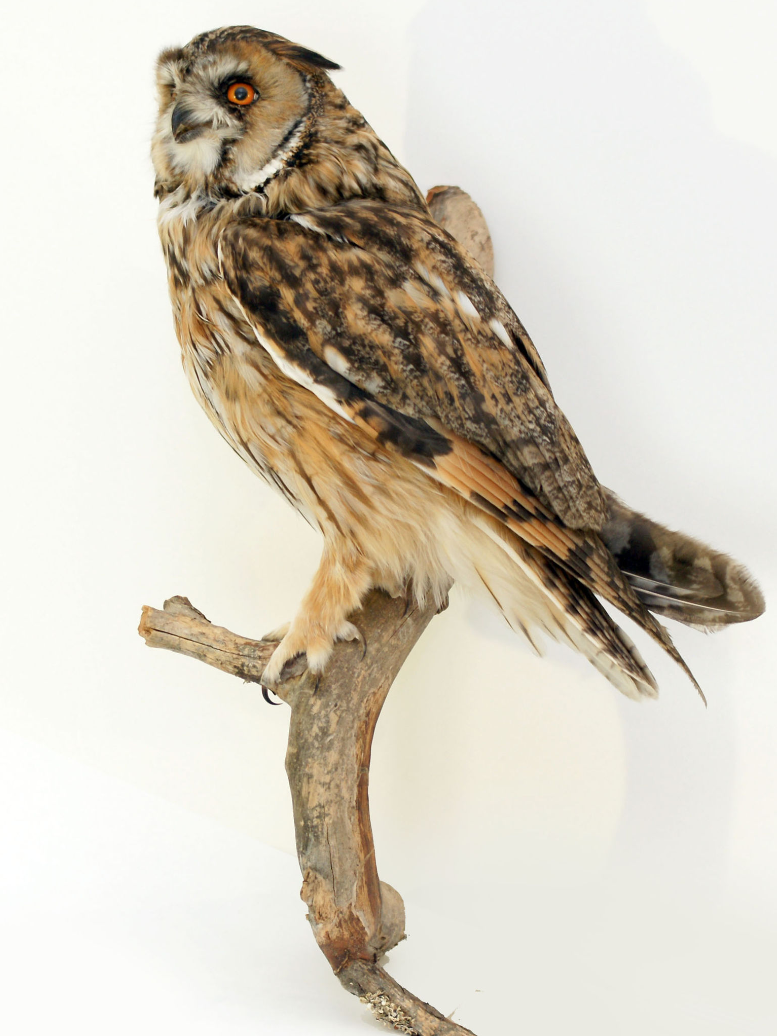
This is a nocturnal bird that usually hunts in open areas, such as meadows, pastures, woodland edges and field margins. Its main prey consists of small rodents, particularly voles. When hunting, the Long-eared Owl flies low over the ground and can locate prey in almost complete darkness, relying primarily on sound. It flies almost silently, thanks to the specialised structure of its wing feathers.
During the breeding season, Long-eared Owls do not build their own nests but instead occupy nests built by other birds, such as crows or ravens. The female usually lays 4–6 eggs and incubates them for approximately 26–28 days. The young leave the nest before they are able to fly and hide in the surrounding vegetation for a while, until they grow stronger and learn to fly.
In Lithuania, the Long-eared Owl is a common but rarely seen bird. Outside the breeding season, these owls often gather in groups and roost in trees during the day. Sometimes, several dozen birds can be found in a single location. October is a month of migration for Long-eared Owls. Many are captured and ringed at the Ventė Cape Ornithological Station and on the Curonian Spit.
The exhibit was created by Kęstutis Bybartas.


