
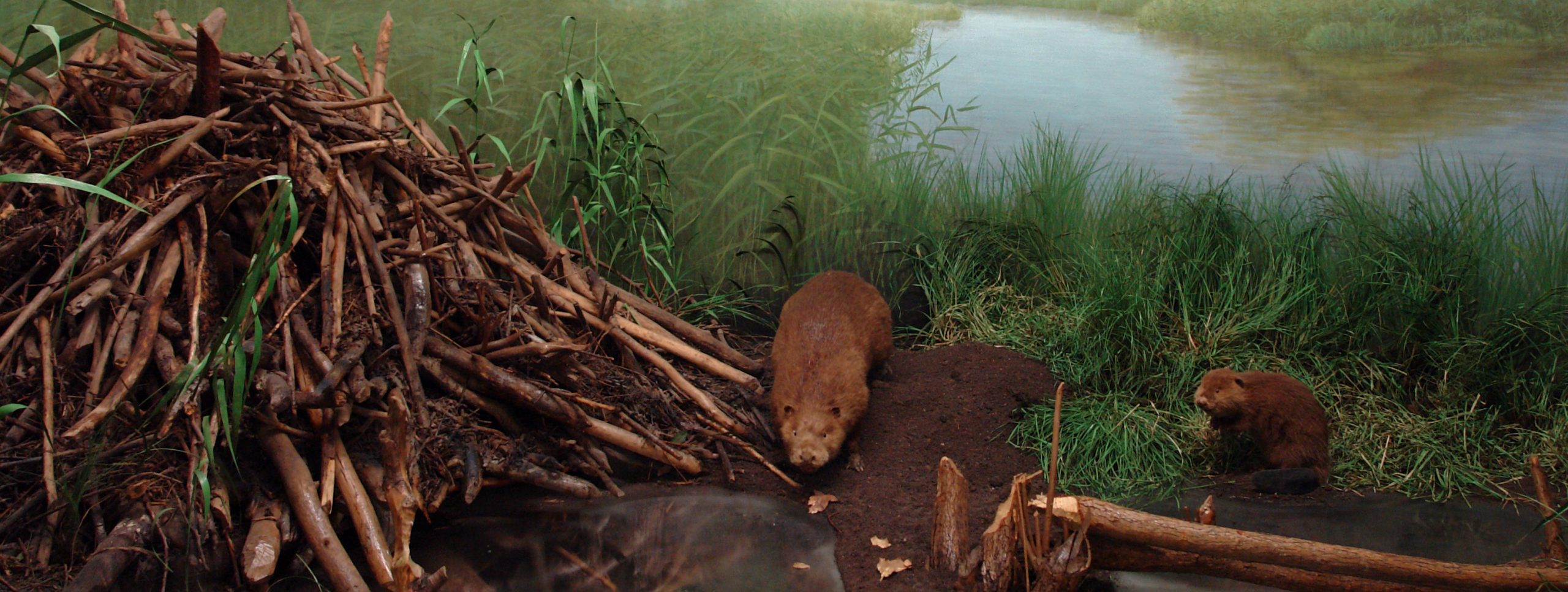
Kaunas Tadas Ivanauskas Museum of Zoology, founded on 15th of July in 1919, is one of the oldest museums in Lithuania and the Baltic countries. The founder of the museum was a famous Lithuanian naturalist Prof. Tadas Ivanauskas. After a century of existence, the museum’s zoology collection consists of about 300,000 animal preparations. The exposition occupies 2,500 sq. m. storage of collections 430 sq. m. The exposition is spread over three floors, six halls and ninety-six displays. More than 15,000 animal exhibits, thirty-four dioramas and forty-six ecological compositions can be found in the exposition halls. The museum organizes tours, educational classes, lectures, exhibitions and other events. The scientific collections consist of close to 300,000 zoological objects. The museum has a separate department of Lithuanian Bird Ringing Center Ventės Ragas Ornithological Station in the Šilutė District.


Tadas Ivanauskas was born on December 16, 1882, at Liebiodka Manor in Lida County (now Belarus) into the noble family of Leonard Ivanauskas and Jadvyga Reichel. Influenced by his father’s interests, he developed a passion for nature from childhood, learning to hunt, prepare animals, create taxidermy mounts, and assemble zoological and botanical collections. He graduated from the Warsaw Gymnasium in 1901, and later, in 1903, graduated from the 10th Boys’ Gymnasium in St. Petersburg. From 1903 to 1910, he studied natural sciences at two Universities: St Petersburg and Sorbonne in Paris, receiving diplomas from both institutions.
In 1910, he founded and directed the “Zootom” Laboratory of Natural Science Visual Aids in St. Petersburg, a role he held until 1915. At the laboratory, he produced zoological, botanical, anatomical, and mineralogical specimens. To gather materials for these specimens, he traveled north in 1914 and 1917, exploring regions like Murmansk, Northern Norway and Arkhangelsk.
From 1916 to 1918, he worked at the Ministry of Agriculture in St. Petersburg. In 1918, he returned to Lithuania and, with his wife Honorata, established a Lithuanian school in Musteika village near Varėna. Both of them taught here.
In 1920, he co-founded the Higher Courses, where he served as a lecturer and head of the Natural Sciences department until 1922. He was also one of the creators of the University of Lithuania. From 1922 to 1940, he held a professorship at the university’s Faculty of Mathematics and Natural Sciences, and simultaneously headed the Department of Zoology and Comparative Anatomy, which was renamed the Department of Zoology in 1929.


