
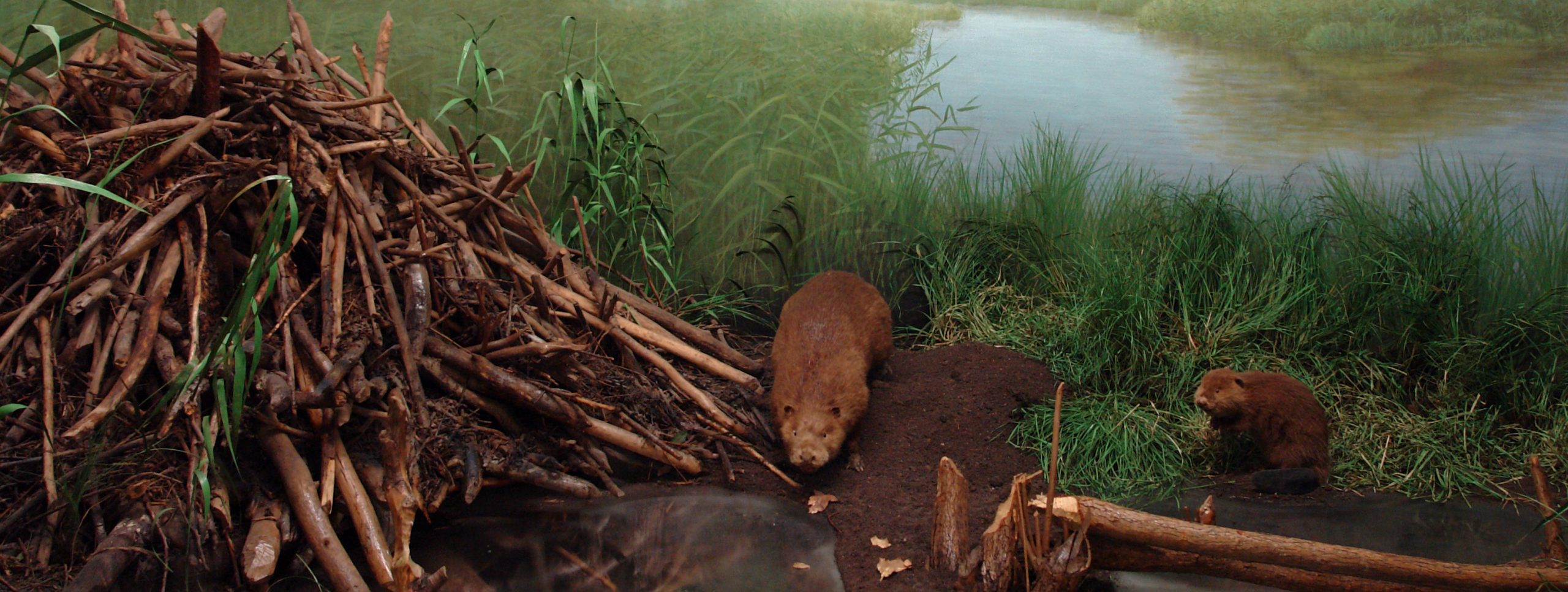
This exhibition showcases remarkable specimens from the collections of the Kaunas Tadas Ivanauskas Museum of Zoology, characterized by colour mutations in skin, fur, and feathers. Three common types of colour mutations are highlighted: albinism, leucism, and melanism.
The impairment in the synthesis of melanin pigment characterises albinism. Albino skin, eyes, and hair have little or no melanin. As a result, the coat or skin of albinos is pale, sometimes even reddish, due to the presence of translucent blood vessels on the surface of the skin. The chance of an animal being an albino is approximately 1 in 20,000.
Another sign of albinism is the reddish appearance of the eyes. This occurs because the lack of melanin in the pigment layer of the retina allows light to reflect off the blood vessels at the back of the eye, making them visible through the iris.
Albino animals face increased survival challenges in the wild compared to animals with normal melanin levels. Their lack of camouflage makes them more conspicuous to predators, and they may also be more easily spotted by their own social groups. Albinism can also hinder predatory animals, as their conspicuous coloration makes it harder to approach prey undetected, potentially leading to reduced hunting success.
Leucism is another condition that causes abnormalities in the coloration of an animal’s skin, fur, or feathers. Leucistic animals have reduced levels of melanin. This results in a white coat (fur, feathers, or scales), while the eyes and other tissues typically retain their normal pigmentation. Partial leucism, where only some areas lack pigmentation, is more common than complete leucism. This results in irregular white patches against the animal’s normal coloration. This partial leucism is often referred to as piebaldism.
Melanism is another type of colour mutation, resulting in an increased amount of dark pigmentation, typically black or near-black, in an animal’s body. The coat colour of an animal with this mutation may vary and is not always uniformly dark. A well-known example is the black panther, which is not a distinct species, but rather a leopard or jaguar exhibiting melanism.
You can observe the standard colour variant in the museum’s display.


